By Ciara Placentino
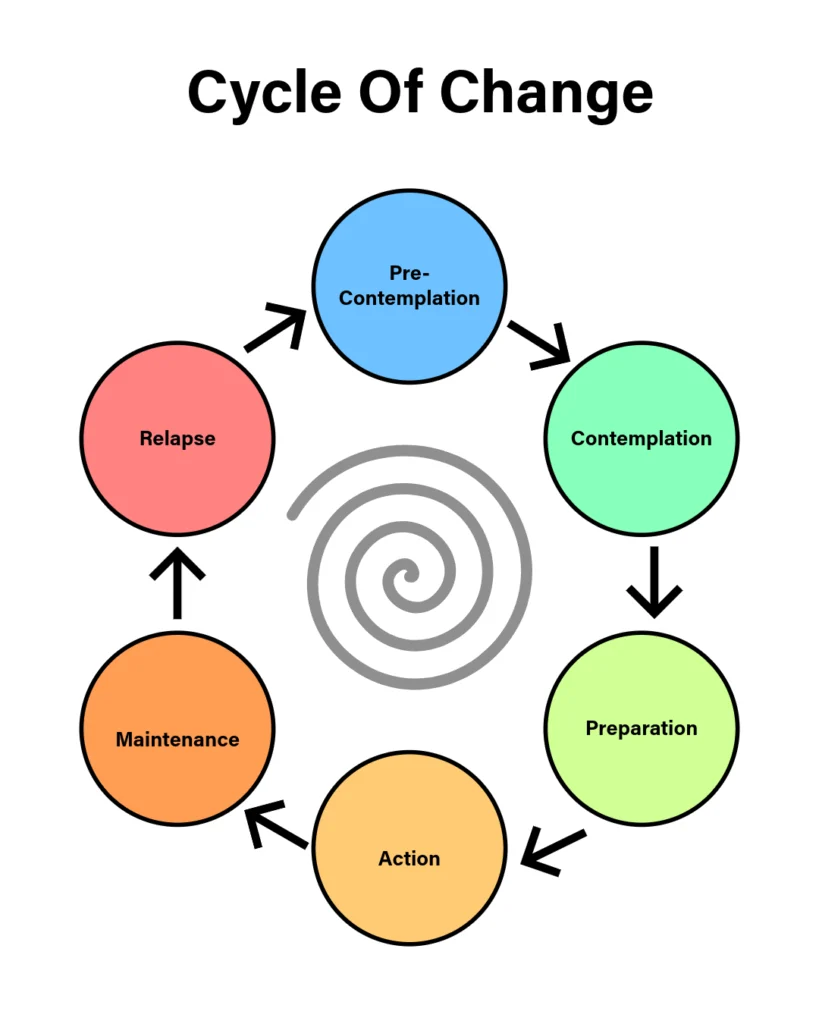
The Cycle of Change theory by Prochaska & DiClemente outlines the different stages a person goes through when making a behavioural change. It is not a formula, but by recognising what stage our client is at, we can work to build their motivation to continue to move round the cycle until they are maintaining their new non-offending behaviour. The stages are as follows:
- Pre-contemplation: We are not aware of the downsides to our behaviour and we are not thinking about changing our behaviour.
- Contemplation: Where we start to be aware of the downsides of the behaviour and start weighing up whether we should change or not. At this stage the balance could be tipped in either direction. We may experience some change talk (thoughts such as “I’m too old for this”, “I’m getting fed up of this”, “I want to see my kids”) and sustain talk (such as “it doesn’t hurt anyone”, “everyone does it”, “it was only a push”). During this stage, we are in a period of ambivalence; a natural part of the process of change, when we are in two minds about wanting to change. This may be due to fear of the unknown, lack of confidence, not knowing whether it is the best thing to do, or not being sure we are capable of making the change. If the anti-social behaviours have been maintained for a considerable amount of time, we may have a sense of comfort for them.
- Preparation/determination: This is when we have decided change is necessary and we begin taking tentative steps in changing behaviour. This is usually a short stage; we may slip back into contemplation or move into action.
- Action: This is where we are starting to move towards the new behaviour. This can be a struggle at first and takes a lot of focused effort but the struggle becomes easier after a while.
- Maintenance: We maintain the changed behaviour. If successful, the new behaviour becomes gradually more ingrained. We can exit the cycle here having made the change, however most of us have lapses along the way. A lapse is a temporary slip back into the previous behaviour; this is an important fork in the road as we can catch ourselves and get back on track or go into relapse.
- Relapse: We slip properly back into the old behaviour, where we are no longer working towards change. We can decide to try again or to continue with the old behaviour.
It is important to note that some people may go around the cycle a number of times before they remain in maintenance and have achieved long term change. As professionals we need to nurture and encourage motivation within service users and meet them where they are at without judgment.
Here are some ways we can work with service users at different points of the cycle of change:
- Pre-contemplation: Allow the service user a non-judgmental space. Use motivational interviewing skills to affirm positive behaviours and develop discrepancies to encourage the service user to identify themselves how their behaviour may not always be helpful to encourage them to move towards the contemplation stage. Identify sources of support and positive influences in their lives which can support them.
- Contemplation: Explore and encourage change talk, drawing on the service user’s strengths to support their self-efficacy in believing they have the capacity to make change. Challenge sustain talk by developing discrepancies and using double-sided reflections. Affirm positive reflections, acknowledge potential difficulties holding them back, and support them in developing the belief they can overcome these.
- Preparation/determination: Affirm positive steps and encourage service user’s to set realistic and manageable mini-goals.
- Action: Affirm service users for persisting despite challenge. Explore any difficulties and help them identify skills to help overcome these, such as positive self-talk.
- Maintenance: Acknowledge and affirm continued progress and efforts. Highlight the benefits of change compared to where they used to be. Support the service user to not catastrophise minor lapses, but instead to develop skills to manage these such as identifying triggers and replacement behaviours.
- Relapse: Allow the service user a non-judgmental space. Identify sources of support and positive influences in their lives which can support them. Identify what challenges led to relapse and develop skills to better manage these in future. Support the service user’s self-efficacy; they have been able to make changes before and they will be able to do it again. You’re here when they’re ready.