
24/07/2025
Chris English
By Victoria Mitton
Victoria Mitton, Youth Justice Oversight Manager at the YJB, recently donned her trainers and headed down the M5 to visit Devon Youth Justice Service’s (YJS) woodland reparation project. Hakeford Woods, in rural North Devon, is a Charitable Incorporated Organisation (CIO) and its beautiful 40-acre woodland provides the setting for this innovative project.
Meaningful reparation – giving back to the community
Victoria met with the reparation worker, Jim, and a child who was currently working there as part of his reparation hours on a 12-month referral order. Jim showed Victoria around and talked about the different projects that children have been involved with. They are open to any child subject to a court order or statutory caution.
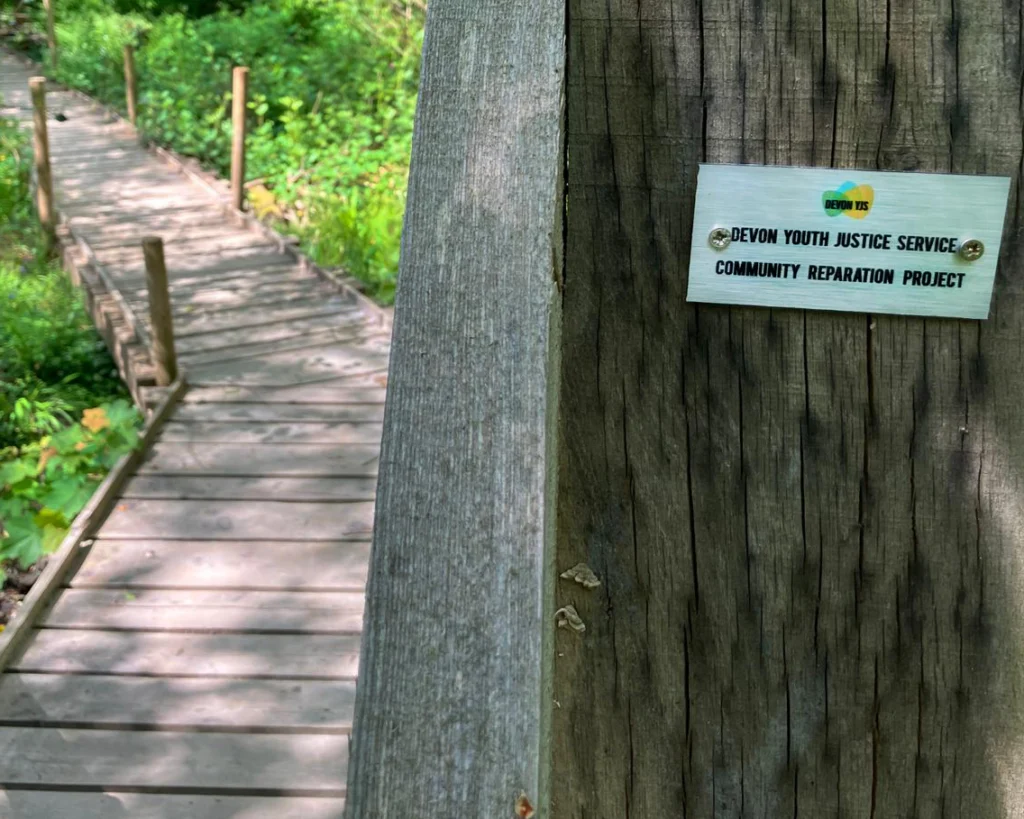
The project offers children the chance to become involved in meaningful activity which benefits the different groups that use the site e.g. forest school groups, students who are home educated, local schools and wellbeing sessions as well as the wider local community. Children have helped to build wooden structures, felled from the wood on site. The nature and size of the structures depends on what’s required, from accessible compostable toilets to wheelchair friendly walkways. One user of an adult wellbeing group stated that he had been unable to visit woodland like this in 27 years and was thrilled with the wheelchair accessible boardwalk built by the children as part of their reparative activities.
A therapeutic, child first/relationship centred approach
All children are supervised and supported by an experienced YJS worker who is well informed in therapeutic interventions and is also a trained forest school practitioner. All outdoor kit e.g. boots and waterproofs are provided by the YJS. What stood out the most to Victoria was the therapeutic and educational value the project offers. It’s a space where children can decompress, connect with someone who listens, and feel genuinely seen.
The project is not yet formally evaluated however Victoria believes that the relationships that are built there are at the heart of the work, and are a real catalyst for change. There was meaningful connection between Jim and the child he was working with, and Victoria noted that children were being well supported by someone who is not only skilled and qualified but also has a genuine caring and compassionate approach.
Benefits of being in nature and exposure to a wider community
There is an unquestionable calming effect that being surrounded by nature has on individuals’ – with a recognition that many of the children being supervised by Devon YJS do not have access to natural spaces as often as they could. One child even stated that this was his first experience of being in the woods. This project is an excellent example of restorative activity serving the wider community and victims as well as being therapeutic in its approach and adhering to the core principles of Child First, particularly ‘as children’ and ‘building a pro-social identity’.
Victoria was pleased to note that the child she met on this visit is progressing well on his order, has demonstrated that he has taken responsibility for his offending behaviour and has complied with all aspects of his order and attended all of his reparation hours. He had the following to say about his worker:
“Working with Jim at Hakeford is very helpful and is enjoyable. It also makes me want to make a change and take them skills to the real world.”
Another child had his reparation sessions specifically timed to take place after his therapy treatment to help regulate him having previously witnessed extreme domestic violence at home.
He wrote:
“It’s good that I do reparation after my therapy treatment with Sandra as it really helps me. I also know that I am helping to make the site better for those that are using it. I get on well with Jim and it is good that he has been through some stuff which helps me when we talk about my stuff. I also really love being outdoors.”
Photo: The boardwalk the children helped to construct, difficult work that required digging and much perseverance.
The YJS shared these top tips for those who want to establish something similar in their local area